
Walker Growth and Police Records
Walker is Livingston Parish’s second-largest incorporated city. The Walker Police Department describes adapting law enforcement to city growth and stresses a community partnership. That local statement supports a useful records point: more city activity can produce more police reports, but it does not create one all-purpose search. The custodian and jurisdiction still depend on who handled the event.
The official police page pictured below is the starting point for current department information.
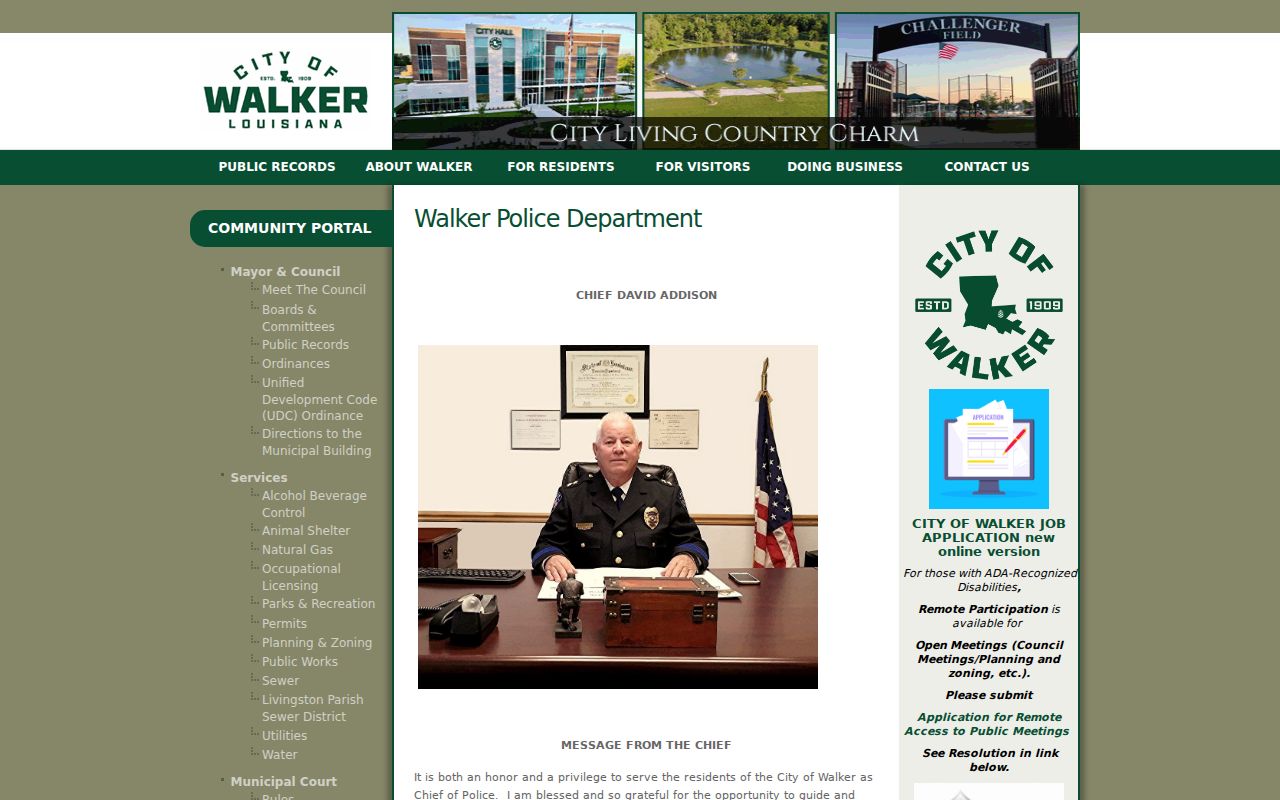
The page identifies the city department, while parish sheriff, detention, and court records remain separate. Crime counts should come from an FBI Crime Data Explorer query for Walker Police and a stated year, never from a parish total or an aggregator.
Checking Criminal History in Walker
Define the record before making a request. Walker police can answer for a city incident report. Municipal Court can answer for a city citation or docket. LPSO or LAVNS can confirm parish custody, and the Livingston Parish Clerk can search filed 21st Judicial District Court matters. No verified Walker public arrest blotter or criminal name-search portal shortens that chain.
- Confirm whether Walker Police or LPSO made the stop or arrest.
- Ask the creating police agency for the incident or arrest report.
- Give Walker Municipal Court the name, citation or case number, and relevant dates.
- Check LPSO custody and the Livingston Clerk when the matter moved to parish channels.
- Use BCII fingerprints to review your own statewide Louisiana repository history.
Preserve request numbers and written results. An oral no-hit from one office is not a citywide, parishwide, or statewide clearance.
Walker Police Department Records
Walker Police holds the reports created by its officers. A useful inquiry includes requester contact details, incident or report number, occurrence date and location, a precise record description, and desired delivery format. The inspected official sources did not publish a report-request PDF, fee schedule, exact required fields, or turnaround. Confirm the current process with the department or city custodian.
| Request detail | Why it helps |
|---|---|
| Incident or report number | Points to the city’s event file |
| Date and location | Separates similar names or events |
| Named record | Distinguishes an initial report from the full investigative file |
| Format and contact | Lets the custodian discuss delivery and cost |
Do not use Walker’s employee handbook as if it set the public police-report process. Its personnel provisions concern a different kind of record.
Walker Reports and Parish Cases
Ask Walker for the report and the appropriate court for the case. The police narrative records the officer’s event and allegations. A prosecutor’s formal charge can differ, and a court disposition can later dismiss, resolve, or sentence the matter. A booking charge is not a conviction.
For parish prosecutions, the Livingston Clerk’s Criminal Department keeps dockets, minutes, filed pleadings, judgments, and related court material. The Clerk offers a $20 certified parish check by check or money order, using a form that requests the searched name, date of birth, requester information, address, telephone, signature, date, and payment. Its certified no-record affidavit only describes the Livingston parish-court search. It does not cover Walker Municipal Court or an event that was never filed.
Municipal Court Records in Walker
The Walker Municipal Court is the local source for its authorized city and traffic docket. A citation may never appear in the parish check if it stays municipal. Supply the cited person’s name, citation or case number, violation date, and hearing date. The official sources did not reveal a searchable public result page, so use the court’s phone or counter route.
The official Municipal Court page shown here should be checked for its current contact instructions.
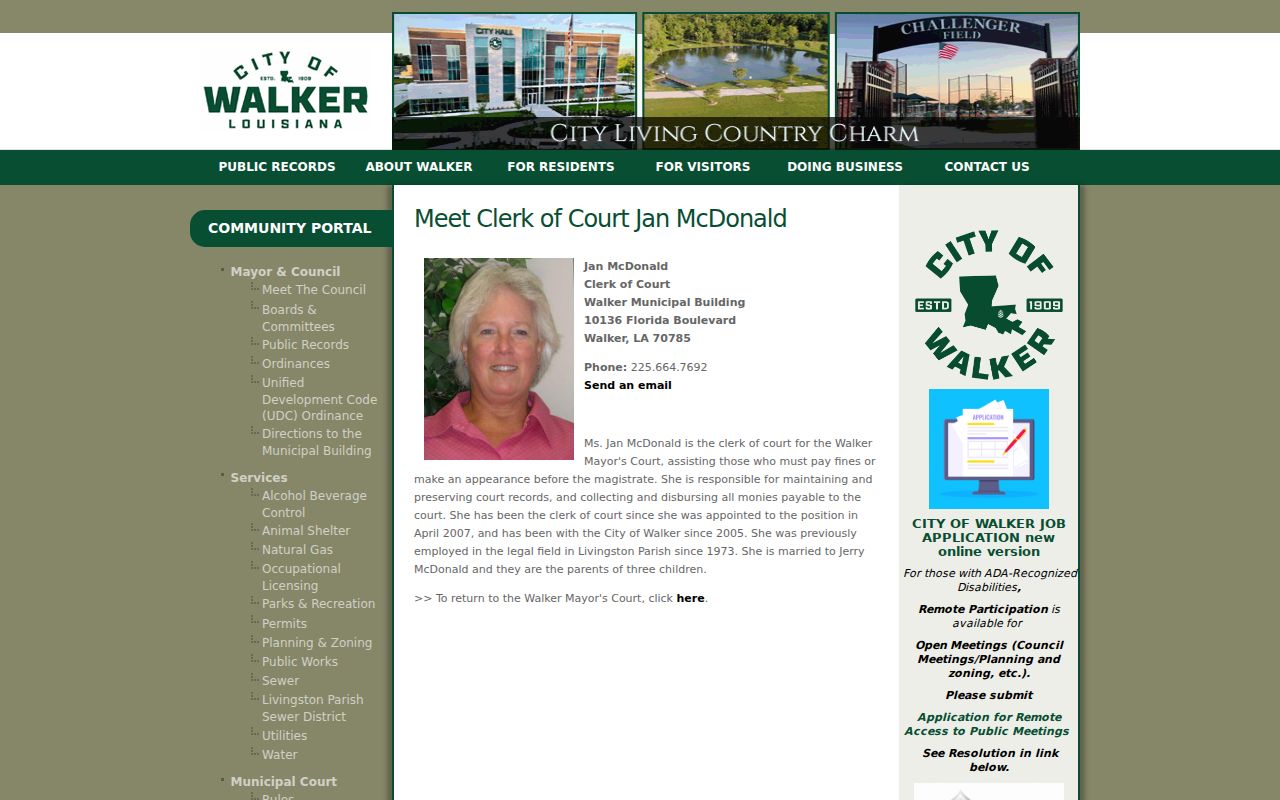
The image supports the direct city-court channel. It should not be read as evidence that all Walker arrests produce a municipal case.
| Court Name | Walker Municipal Court |
|---|---|
| Case Types Heard | Authorized city, ordinance, traffic, and qualifying misdemeanor matters |
| Case Lookup Channel | Official court phone or counter; no verified public name portal |
| What to Supply | Name, citation or case number, violation date, and hearing date |
| Copies & Fees | No current schedule verified; ask the court before ordering |
Walker Municipal and District Records
Municipal Court and the 21st JDC do different work. Walker’s authorized local docket can contain ordinance, traffic, and qualifying misdemeanor matters. Felonies proceed to the district court and Livingston Parish Clerk. Some outside-city misdemeanors and traffic matters also follow the parish route. The boundary and charge type therefore matter as much as the mailing address.
Record flow: Walker Police Department › Walker Municipal Court or Livingston Parish Courts › Louisiana State Police Bureau of Criminal Identification and Information
The Louisiana law page below provides statutory context for mayor and municipal courts.
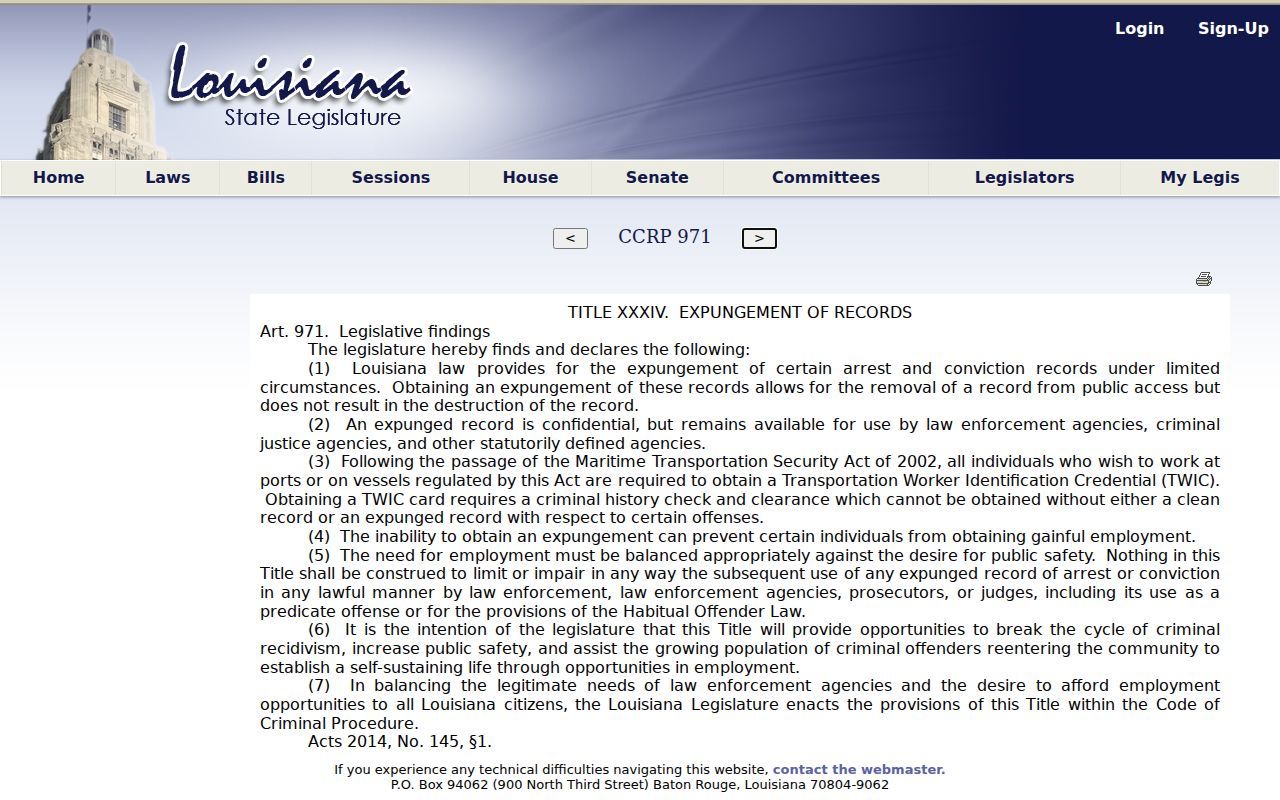
The statute image supplies legal context, while the court itself remains the best source for its present docket procedures and costs.
Walker Arrests and Bookings
A Walker arrest may create records in two agencies. Walker Police owns the report it made, while the Livingston Parish Detention Center may own the intake and custody record. Check LPSO or LAVNS through VINELink for current custody or notifications. Then return to the proper court for filed charges and results.
If a sentenced person transfers to the Louisiana Department of Public Safety and Corrections, use the state locator. DOC search comes later than local booking because the state system concerns sentenced state custody, not every person held pretrial in the parish jail. A transfer can remove a name from a local custody view without meaning release into the community.
Note: Write down the arresting agency, event date, and booking details before calling, since a name alone may not identify the right person.
Walker Criminal Record Fallbacks
When no public blotter or name portal exists, direct requests are not a lesser source. They are the documented route. Start with the department or city custodian for the report. Contact Municipal Court for the city docket. Ask the parish Clerk whether a felony or qualifying parish prosecution was filed. Check LPSO or LAVNS for present custody.
- Police report
- The city agency’s event record, which can exist without a court case.
- Booking
- The detention intake entry and listed charges, not a final judgment.
- Docket
- The court’s case record and procedural entries.
- Disposition
- The filed case outcome shown by court minutes or judgment.
If nothing appears, ask whether filing was delayed or declined, whether the matter remains municipal, and whether the supplied name and date were exact.
Preserve Walker Court Dispositions
Written dispositions are more useful than a phone statement that nothing was found. For a known district case, give the Livingston Clerk the defendant name, docket number, division, and date when available. A transcript request also needs the hearing date, defendant name, division, and requester contact information. A transcript is the reporter’s word-for-word record, not the complete case file, so ask separately for minutes, pleadings, or judgment.
The Livingston Clerk Criminal Department page identifies the parish office responsible for those files. Its staff records open-court exhibits, maintains dockets, issues notices, transcribes minutes, and prepares criminal appeals. Those duties explain why a district file can answer questions that a Walker police report or parish booking cannot. The Clerk main number is 225-686-2216. Specify Livingston Parish because the 21st Judicial District spans Livingston, St. Helena, and Tangipahoa parishes.
When a statewide entry seems wrong, obtain the certified source disposition first. Ask the reporting court or agency to correct its own record, then follow BCII’s review and challenge route. This sequence keeps the city, parish, and state offices within their actual authority.
Where Walker Records Go
Walker records do not automatically merge at once. The city retains its police material. Municipal Court keeps cases within its authority. LPSO documents parish booking, while the Livingston Clerk maintains district-court filings. Reported fingerprints and dispositions can later become part of Louisiana Computerized Criminal History.
Recent events are best checked with the source agency and custody office. Older matters need the court judgment or minutes. A complete review of your own Louisiana repository history requires BCII Right to Review and fingerprints through Louisiana Applicant Processing Solution. LACCH contains Louisiana records only and can include arrests, dispositions, supervision bookings, and incarceration information.
Walker Public Records Requests
Louisiana Public Records Law supports requests to the city custodian, subject to exceptions. Describe the event, date, location, agency, record type, and preferred format. If the full investigative file is restricted, ask for the initial report and every segregable, nonexempt part. A focused request makes it easier to identify the responsive city record.
Pending investigations, informant identities, juvenile information, medical content, victim-sensitive details, and evidence may be withheld or redacted. Ask the custodian to cite the legal basis for each withholding. No exact Walker police-report fee or response time was verified, so confirm both before ordering copies.
Public Access Rules in Walker
Public court material differs from BCII’s compiled fingerprint history. Louisiana law broadly recognizes access to public records, but it also limits specified law-enforcement material and separately governs criminal-history dissemination. Sealed, expunged, juvenile, victim, medical, and active-investigation records may not be open. The correct response depends on the record and the office holding it.
Key Statutes:
Louisiana R.S. 44:31 provides the general right to examine or copy public records, subject to exceptions.
Louisiana R.S. 44:3 addresses protected law-enforcement and investigative material.
Louisiana R.S. 15:587 governs dissemination of state criminal-history information.
Ask which source was searched and the date of that search. Those two facts define what a Walker record response can establish.