
Three Livingston Record Custodians
Three different destinations carry “Livingston” in their names. The Town of Livingston Police Department creates town incident records. The Livingston Parish Sheriff and Clerk manage separate parish functions. The Livingston Parish Detention Center creates booking and custody records at another location. Reading the agency seal or heading is the fastest way to avoid sending a request to the wrong office.
| Heading on record | First records source | Likely record |
|---|---|---|
| Town of Livingston Police Department | Town police at Circle Drive | Incident or arrest report |
| Livingston Parish Sheriff | LPSO | Sheriff report, warrant, or booking material |
| Twenty-First Judicial District Court, Parish of Livingston | Livingston Parish Clerk | Filed criminal case |
The parish seat places government offices near one another, but proximity does not merge their files or legal duties.
Checking Criminal History in Livingston
Start with the record’s owner. The town police report explains a town event. Mayor’s Court answers for a town-code citation. LPSO or LAVNS answers current parish custody questions. The Livingston Clerk handles felony and other 21st JDC filings. No verified town case-name portal, blotter, request PDF, or fee schedule replaces this source-by-source method.
- Inspect the seal or heading for town police, LPSO, or the 21st JDC.
- Request the incident record from the agency that created it.
- Ask Mayor’s Court about a town ordinance citation or docket.
- Use parish detention for booking and the Clerk for felony case status or disposition.
- Use BCII fingerprints to review your own Louisiana repository record.
Keep written results and search dates. A response from one “Livingston” office cannot establish what every other office holds.
Livingston Police Department Records
The Town of Livingston Police Department is at 20550 Circle Drive, Livingston, LA 70754. It is the correct first source for an incident report created by town officers. A focused request supplies requester contact details, report number when known, event date and location, the specific record wanted, and delivery format. The exact form, fee, and response time were not published in the inspected official sources.
The department’s official page shown below distinguishes the town agency from the parish sheriff.

The page identifies the local police source. It does not act as a search of LPSO bookings or district-court cases.
Livingston Police at Circle Drive
Town police records begin at Circle Drive, not at the courthouse simply because Livingston is the parish seat. Use the official Livingston Police contact page to confirm current contact instructions before making a request.
The official contact source is pictured here.
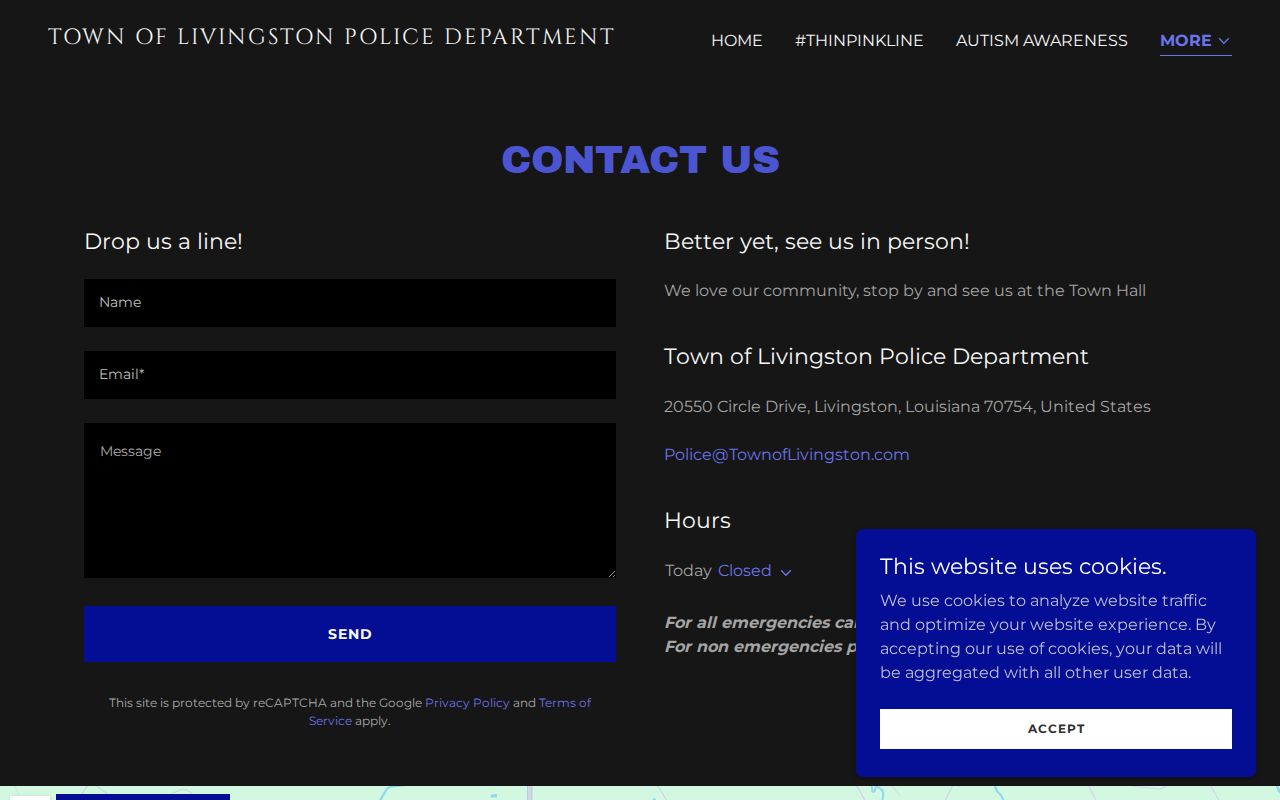
The contact image supports the direct town route. Do not send a town police-report request to the parish Clerk, whose role is maintaining court files rather than city investigative reports.
A report request should name the event with enough detail to find it. If some investigative content is restricted, ask for the initial report and all segregable nonexempt material. Ask the custodian for the legal basis for any redaction or withholding.
Municipal Court Records in Livingston
Livingston uses a Mayor’s Court for its municipal docket. The town code establishes that court with exclusive original jurisdiction over offenses and complaints arising under the municipal code. A town ordinance citation can therefore remain in this local docket, even though the nearby parish courthouse handles district matters. Ask Mayor’s Court using the cited person’s name, citation or docket number, date, and offense. No public online result interface was verified.
| Court Name | Town of Livingston Mayor’s Court |
|---|---|
| Case Types Heard | Offenses and complaints arising under the municipal code |
| Case Lookup Channel | Town phone or counter inquiry; no verified public name portal |
| What to Supply | Defendant or cited person, citation or docket, date, and offense |
| Copies & Fees | Verify the current town schedule directly with the court |
The court’s own current response should control details that were not published in the inspected source set. Ask whether the citation number, offense date, or hearing date is the best local index before requesting a copy. That step can prevent a false no-hit when a name is misspelled or shared by more than one person.
Livingston Mayor’s Court Authority
Louisiana and local law supply the framework for Mayor’s Court jurisdiction and costs. The first official statute source below concerns the relevant local-court framework.
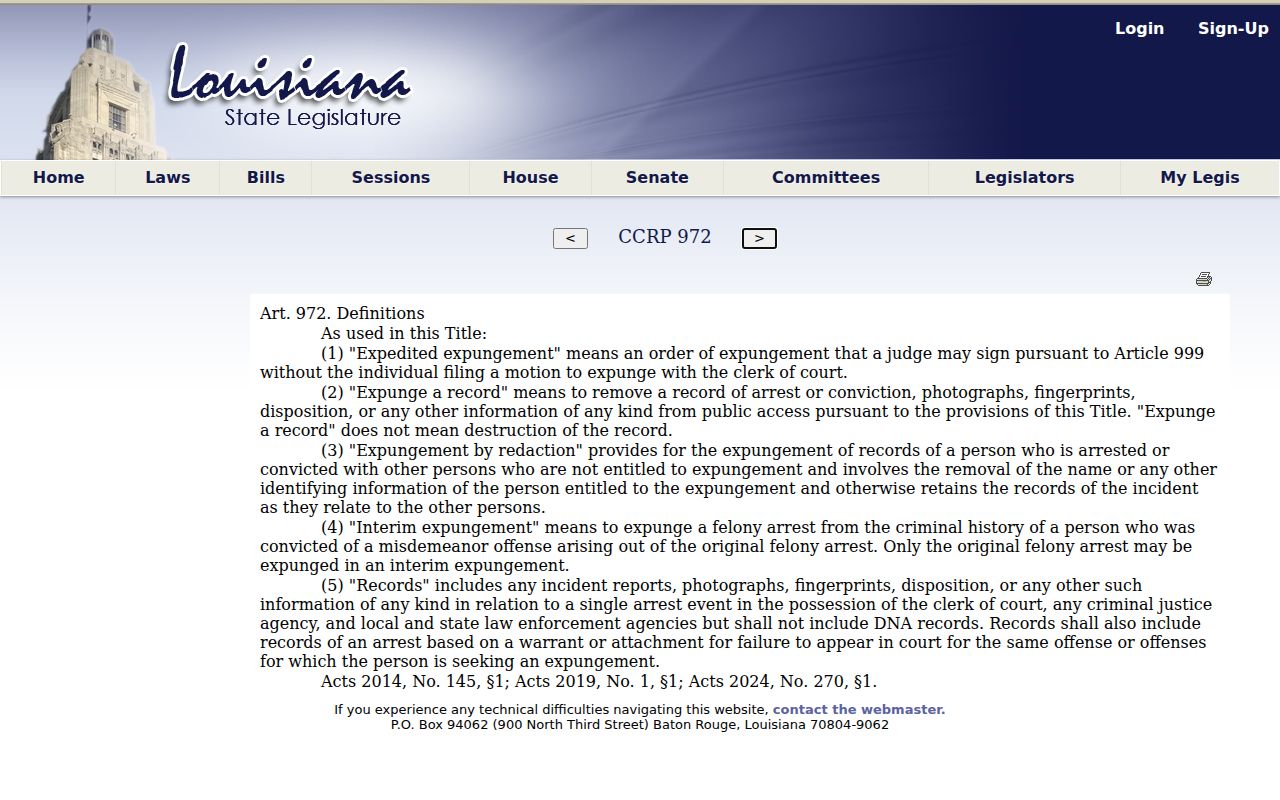
The statute image provides legal context, but it does not publish the town’s current docket or fee schedule.
A second official statute source addresses related court-cost authority.
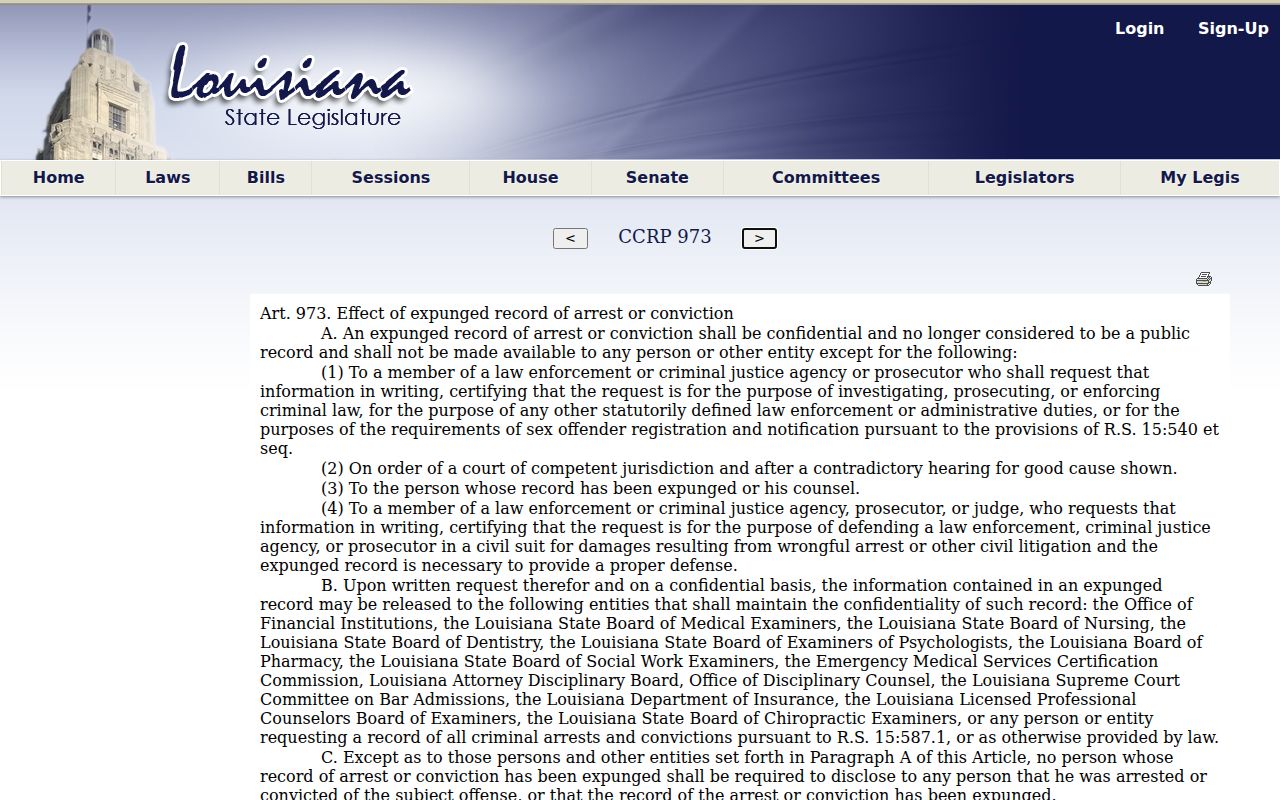
The second image reinforces why current costs should be verified with Mayor’s Court instead of inferred. A local citation can remain there, while a felony must be directed to the 21st JDC.
Livingston Arrests and Bookings
Town police may make the arrest, while the Livingston Parish Detention Center creates the booking and custody record. Ask town police for the incident or arrest narrative. Use LPSO or LAVNS through VINELink for custody and notifications. These records describe different stages and should not be treated as duplicates.
A booking entry may show intake date, arresting agency, listed charges, custody, and bond. It does not establish what prosecutors later filed or how a judge resolved the case. If a sentenced person moves into Louisiana Department of Public Safety and Corrections custody, use the state locator. A state transfer can remove someone from the local custody view without indicating release.
Livingston Citations and Parish Cases
The courthouse is close, but it may not hold a town citation. Mayor’s Court is the first source for a municipal-code matter. The Livingston Parish Clerk is the source for felonies and other proceedings filed in the parish division of the 21st JDC. “21st JDC” alone is not enough because that judicial district spans three parishes. Always specify Livingston Parish.
For a known parish case, give the Clerk’s Criminal Department the defendant name, docket number, division, and date when available. Ask for minutes or judgment to confirm the result. A transcript is a word-for-word reporter record, not the entire case file, so it may need to be paired with pleadings or the judgment.
Note: A court result is stronger evidence of disposition than the charge listed at booking.
Livingston Parish Criminal Record Check
The Livingston Parish Clerk offers a $20 certified criminal record check, payable by check or money order. Its form asks for the name searched, date of birth, requester contact name, mailing address, telephone, signature, date, and payment. The Clerk searches its Livingston courthouse system and files, then may list docket numbers, offenses, and brief dispositions.
A no-record result is a certified affidavit about that one parish-court search. It does not cover Mayor’s Court, another parish, another state, federal court, or an incident never filed. Check the Clerk’s official record-check instructions for the current form before mailing or visiting. If a short result lacks context, order the minutes or judgment.
Where Livingston Records Go
Town records can move through a chain, but no single office owns every link. Town police create the initial event record. Parish detention may add booking data. Mayor’s Court or the district court records the filed matter, depending on jurisdiction. Reported fingerprints and dispositions may later feed the Louisiana criminal-history repository.
Record flow: Livingston Police Department › Livingston Mayor’s Court or Livingston Parish Courts › Louisiana State Police Bureau of Criminal Identification and Information
Check the source agency for recent activity, the court for a formal outcome, and BCII Right to Review for your own fingerprint-linked Louisiana history. Louisiana Computerized Criminal History covers Louisiana only and can contain arrest, disposition, incarceration, and supervision data when reported.
No Livingston Online Case Search
No official town case-name portal, police blotter, or report-request PDF was confirmed. The fallback is a phone, counter, or written chain: town police for the report, Mayor’s Court for a municipal citation, LPSO for custody, and the parish Clerk for a felony or qualifying parish prosecution. Direct contact is the documented access route, not a sign that the record does not exist.
- Town report
- The event record made by Livingston Police.
- Mayor’s Court docket
- The local case record for matters within municipal-code jurisdiction.
- Parish booking
- The LPSO detention intake record, not a disposition.
- District disposition
- The filed parish case result reflected in minutes or judgment.
If no case is found, verify the spelling and date, then ask whether filing was delayed, declined, or kept in the town docket.
Correct Livingston Records at Source
A town police error, parish booking error, court disposition error, and statewide repository error have different owners. Start with the office that created the incorrect fact. For a statewide issue, obtain a certified disposition from the court, ask the reporting agency or court to correct its record, and then follow BCII’s challenge instructions.
BCII’s Right to Review uses fingerprints through Louisiana Applicant Processing Solution. It is designed for a person to inspect their own Louisiana history and reduces same-name confusion. The response can still be incomplete if a conviction was not reported, and it does not include other-state records. Preserve every correction letter and certified court document.
Public Access Rules in Livingston
Louisiana Public Records Law broadly covers documentary material used or retained in public business, including electronic records. Exceptions still protect specified investigative details, informants, juveniles, medical material, victim-sensitive information, sealed or expunged content, and other restricted records. Ask for segregable nonexempt portions and a written legal basis when part of a town record is withheld.
Key Statutes:
Louisiana R.S. 44:31 states the general right to examine or copy public records, subject to legal exceptions.
Louisiana R.S. 44:3 limits release of specified law-enforcement and investigative material.
Louisiana R.S. 15:587 governs dissemination of state criminal-history information.
A public town document and a compiled state fingerprint history are different products. Confirm the source and scope of any response before relying on it.